Step-by-Step Organic Farming Methods for Sustainable Soil Health and Abundant Harvests
Blog post description.
6/26/20254 min read
Certainly! Here’s the previous detailed explanation transformed into a blog format. The tone is engaging and informative, ideal for readers interested in organic farming and aligned with your Biowarm brand philosophy.
Unlocking the Power of Organic Farming: Principles, Practices, and Benefits
Organic farming is more than just a method of growing plants—it’s a way of working in harmony with nature to nurture healthy soil, vibrant ecosystems, and wholesome food. If you’re curious about how to transform your garden or farm into a flourishing, sustainable system, this guide will walk you through the core principles, practical techniques, and key benefits of organic farming.
What Is Organic Farming?
At its heart, organic farming is a holistic agricultural system guided by four fundamental principles: Health, Ecology, Fairness, and Care. These pillars, established by the International Federation of Organic Agriculture Movements (IFOAM), shape every decisionfrom how we manage soil and crops to how we treat people and protect the planet.
Organic farming means working with nature, not against it. It rejects synthetic chemicals and genetically modified organisms (GMOs), instead relying on natural processes like nutrient cycling and biological pest control. The result? Fertile soils, rich biodiversity, and food that supports the well-being of animals, people, and the environment.
The Four Guiding Principles of Organic Farming
1. Health
Organic farming prioritizes the health of the entire ecosystem—soil, plants, animals, humans, and the planet. Healthy soil teems with life and supports nutritious crops, which in turn nurture animals and people. This principle extends beyond physical wellness to include social and ecological well-being. Avoiding chemical pesticides and fertilizers protects everyone involved.
2. Ecology
Organic agriculture embraces biodiversity and natural cycles. It mimics the resilience of natural ecosystems through crop rotation, companion planting, and polycultures. By preserving wildlife habitats and encouraging beneficial insects, organic farms maintain ecological balance and reduce pest and disease outbreaks naturally.
3. Fairness
Fairness is about justice and equity—from fair treatment of farm workers and animals to responsible use of shared resources. Organic farming fosters fair trade, safe working conditions, and equitable access to markets, ensuring that the benefits of sustainability reach everyone now and in the future.
4. Care
This principle emphasizes managing farms responsibly and with precaution. It calls for continuous learning, adaptation, and integrating traditional and scientific knowledge. Organic farmers avoid risky technologies like GMOs and take a thoughtful approach to innovation, always with the long-term health of people and the planet in mind.
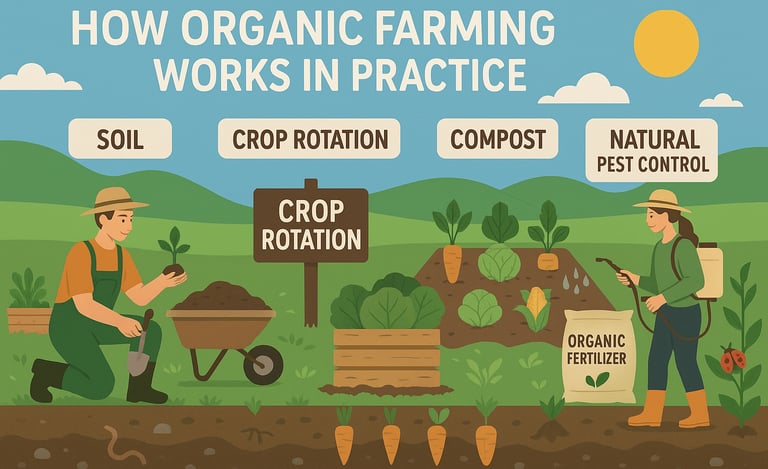
How Organic Farming Works in Practice
Building Healthy Soil
Healthy soil is the foundation of successful organic farming. Techniques like composting, planting cover crops, and minimizing tillage help build organic matter and foster beneficial microbes. These living soils retain moisture, cycle nutrients efficiently, and suppress diseases naturally.
Enhancing Biodiversity
Diverse crop rotations, polycultures, and companion planting create complex ecosystems that resist pests and replenish soil nutrients. For example, planting legumes fixes nitrogen, while marigolds repel harmful nematodes. Diverse farms support pollinators and wildlife, boosting ecosystem resilience.
Natural Pest and Disease Control
Instead of synthetic pesticides, organic systems rely on natural pest predators, physical barriers like row covers, and organic-approved sprays such as neem oil. Prevention through soil health and planting diversity is key—strong plants and thriving ecosystems don’t succumb easily to pests or diseases.
Conserving Resources
Water conservation is paramount—using mulch, drip irrigation, and rainwater harvesting reduces water use and protects plants. Energy inputs are minimized by relying on natural amendments and efficient farm practices, reducing the farm’s ecological footprint.
Fair and Responsible Practices
Fair wages, safe work environments, and animal welfare are prioritized. Organic farming builds strong communities and equitable supply chains, ensuring that sustainability benefits all stakeholders.
The Many Benefits of Organic Farming
Environmental Advantages
Organic farming improves soil fertility and biodiversity while reducing pollution from chemicals. Rich organic soils capture carbon, helping mitigate climate change and preserve water quality.
Economic Opportunities
Consumers increasingly seek organic produce, often willing to pay premium prices that support farmers. Reduced dependency on costly synthetic inputs lowers expenses over time. Healthy soils also mean more resilient, productive farms.
Health and Nutrition
Organic foods are free from pesticide residues and may offer higher antioxidant and vitamin content, supporting better nutrition and food safety.
Climate Impact
Organic soils function as carbon sinks, and the method’s lower fossil fuel use helps limit greenhouse gas emissions, making it a vital tool for climate-friendly agriculture.
Overcoming Challenges on the Organic Journey
Transitioning to organic farming can bring challenges initial yields may dip, labor demands can be higher, and managing nutrients organically requires care and knowledge. But with improved organic inputs, mechanization, and access to digital tools and farmer networks, these challenges are manageable and temporary.
Getting Started: A Step-by-Step Guide
Test Your Soil: Understand your soil’s needs through testing and amend with compost and organic matter accordingly.
Start Composting: Use kitchen scraps, garden waste, and manure to build rich organic compost.
Plan Crop Rotation: Rotate plants to maintain soil fertility and disrupt pests.
Choose Organic Seeds: Source untreated, non-GMO seeds adapted to your climate.
Encourage Beneficial Insects: Plant insectary flowers and avoid synthetic pesticides.
Practice Water Conservation: Mulch and install drip irrigation to maintain moisture efficiently.
Observe and Adapt: Regularly monitor plant and soil health, adjusting techniques as needed.
Final Thoughts
Organic farming embodies a powerful vision for sustainable agriculture that nurtures life in all its forms. By embracing the principles of Health, Ecology, Fairness, and Care, gardeners and farmers can build thriving ecosystems that produce nutritious food and protect our planet’s future.
Aligned with Biowarm’s commitment to organic soil health and sustainable growth, these practices offer a clear roadmap for anyone ready to make their land a living, breathing ecosystem. The journey requires dedication and learning, but the rewardsfor your soil, your crops, your communities, and the Earthare immeasurable.
If you're inspired to dive into organic farming or want to learn more about building healthy soils with Biowarm, stay tuned for upcoming guides, tips, and resources designed to help you grow sustainably and successfully